Samuel Lowery

Applied Mathematics PhD Student

Statement

As a PhD Student in applied mathematics, my research and training have centered on using mathematical modeling, data science, and numerical methods to solve real-world problems. I am now seeking out internships where I can apply these skills to build data-driven solutions with impact.


With experience in developing, optimizing, and deploying advanced machine learning models, I’m motivated to help companies translate data into high-performing, production-ready systems.


Work Experience

Graduate Teaching Associate July 2024 - Present

Skills

Projects

Reinforcement Learning in Control PDE Problems

Python, PyTorch, Gymnasium, Proximity Policy Optimization (PPO), Collaborative Team-work
  • Implemented a Proximal Policy Optimization (PPO) algorithm from scratch to solve continuous control problems governed by partial differential equations (PDEs).
  • Modeled the PDE-constrained environment using finite difference methods and integrated it with a custom Gymnasium-compatible RL environment.
  • Designed reward functions to reflect system control goals under PDE constraints.
View in Github

Education

The Ohio State University (OSU) | Columbus, OH

July 2024 - Present

PhD in Mathematics, Applied Track

Slippery Rock University | Slippery Rock, PA
August 2020 - May 2024

BS in Mathematics with minors in Computing and Physics Summa Cum Laude

Research

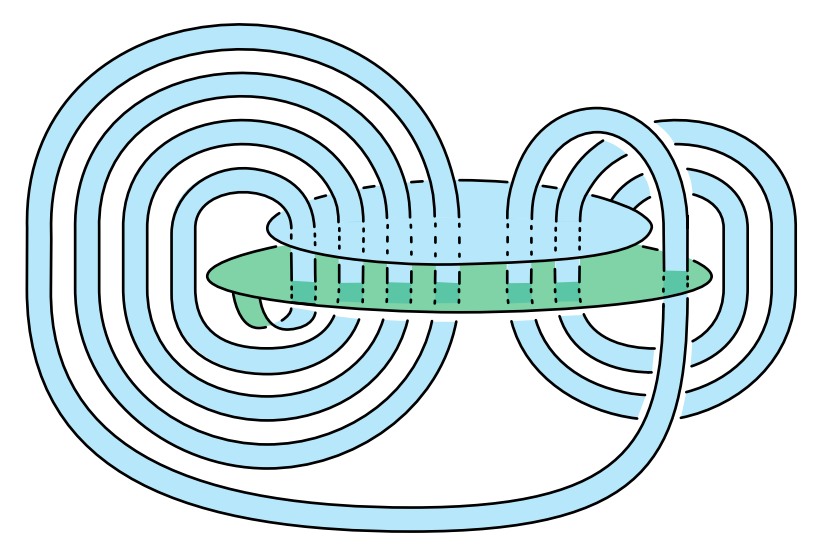
Ribbon numbers of 12-crossing knots

(In collaboration with Xianhao An, Matthew Aronin, David Cates, Ansel Goh, Benjamin Kirn, Josh Krienke, Minyi Liang, Ege Malkoc, Jeffrey Meier, Max Natonson, Veljko Radić, Yavuz Rodoplu, Bhaswati Saha, Evan Scott, Roman Simkins, and Alexander Zupan)
Ribbon Knots, Ribbon Codes, 12-Crossing Knots
  • Led research meetings to coordinate progress, encourage discussion, and maintain project momentum.
  • Classified all Alexander polynomials of ribbon codes up to ribbon number four
View Arxiv Pre-Print

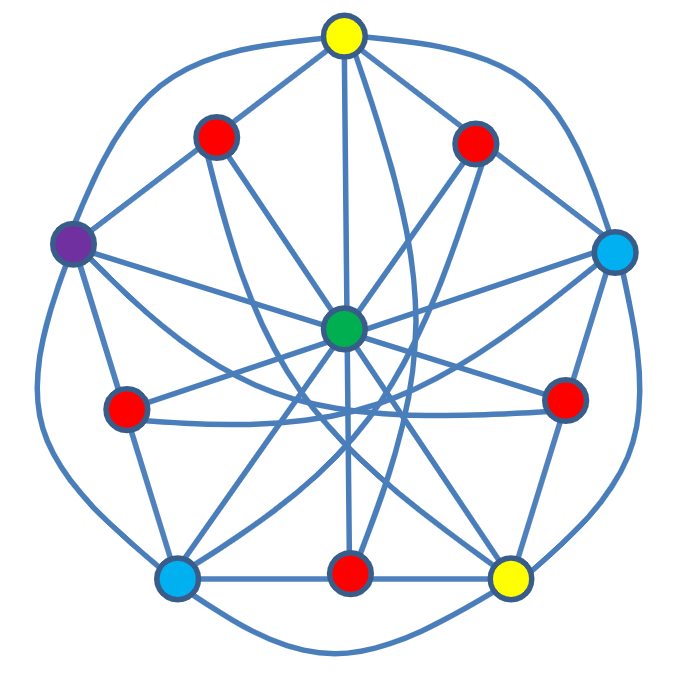
Coloring intersection points of line segments

(In collaboration with Boris Brimkov)
Line Segments, Chromatic Number, Graph Theory, Erdős–Faber–Lovász Conjecture
  • Discovered only known family of line segments with a chromatic number four greater than the maximum number of intersections per segment.
  • Coded Mathematica program to graph the chromatic number of random sets of line segments
Pre-Print In Preparation